Skip to content
Lord Ganesha

Lord Ganesha

गणेश

The Remover of Obstacles and Lord of New Beginnings

3 mantras available

About Lord Ganesha

Lord Ganesha, also known as Ganapati, Vinayaka, and Vighnaharta, is one of the most worshipped deities in Hinduism. He is the son of Shiva and Parvati, and is revered as the remover of obstacles (Vighnaharta), the patron of arts and sciences, and the god of intellect and wisdom. Every Hindu ritual, ceremony, and new venture begins with an invocation to Ganesha, as he is the Lord of Beginnings (Pratham Pujya).

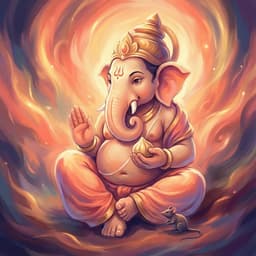
Ganesha is instantly recognizable by his elephant head, large belly, and four arms. He holds an ankusha (goad) to push devotees forward on the spiritual path, a pasha (noose) to restrain negativity, a modak (sweet) representing the sweetness of spiritual realization, and one hand in blessing (ashirwad mudra). His broken tusk symbolizes sacrifice for knowledge — he broke it to write the Mahabharata as dictated by Sage Vyasa. His mount, a mouse (Mooshika), represents the conquered ego.

Ganesha mantras are chanted before any new undertaking — starting a business, buying a home, beginning studies, or embarking on a journey. His mantras remove obstacles, grant wisdom, bring success, and ensure auspicious beginnings. Ganesh Chaturthi, the ten-day festival celebrating his birth, is one of India's grandest festivals, especially in Maharashtra.

Attributes & Symbolism

1Elephant Head
2Modak (Sweet)
3Ankusha (Goad)
4Pasha (Noose)
5Broken Tusk
6Mooshika (Mouse Mount)
7Large Belly (Lambodara)
8Om Symbol on Forehead

All Lord Ganesha Mantras

Frequently Asked Questions

Lord Ganesha, also known as Ganapati, Vinayaka, and Vighnaharta, is one of the most worshipped deities in Hinduism. He is the son of Shiva and Parvati, and is revered as the remover of obstacles (Vighnaharta), the patron of arts and sciences, and the god of intellect and wisdom. Every Hindu ritual, ceremony, and new venture begins with an invocation to Ganesha, as he is the Lord of Beginnings (Pratham Pujya). Ganesha is instantly recognizable by his elephant head, large belly, and four arms. He holds an ankusha (goad) to push devotees forward on the spiritual path, a pasha (noose) to restrain negativity, a modak (sweet) representing the sweetness of spiritual realization, and one hand in blessing (ashirwad mudra). His broken tusk symbolizes sacrifice for knowledge — he broke it to write the Mahabharata as dictated by Sage Vyasa. His mount, a mouse (Mooshika), represents the conquered ego. Ganesha mantras are chanted before any new undertaking — starting a business, buying a home, beginning studies, or embarking on a journey. His mantras remove obstacles, grant wisdom, bring success, and ensure auspicious beginnings. Ganesh Chaturthi, the ten-day festival celebrating his birth, is one of India's grandest festivals, especially in Maharashtra.
MantraList.in features 3 mantras dedicated to Lord Ganesha. These include various types such as beej mantras, gayatri mantras, stotras, and devotional prayers. Each mantra serves a specific spiritual purpose and carries unique benefits.
All Lord Ganesha mantras carry divine power when chanted with devotion and sincerity. The most widely chanted Lord Ganesha mantra is often considered to be the primary mantra associated with this deity. The effectiveness of any mantra depends on the practitioner's faith, consistency, and correct pronunciation rather than any inherent hierarchy.
Yes, Lord Ganesha mantras can be chanted at home in a clean, quiet space. Face east or north while chanting. You can set up a small altar or simply sit in a calm corner. The most important factors are devotion, regularity, and a peaceful mind. Morning hours (especially Brahma Muhurta) are traditionally considered the most auspicious time.
Worshipping Lord Ganesha through mantras and prayers brings spiritual growth, inner peace, and divine blessings. Devotees experience increased clarity, protection from negative energies, fulfillment of righteous desires, and progress on the spiritual path. The specific benefits vary by mantra -- explore each mantra page for detailed information.